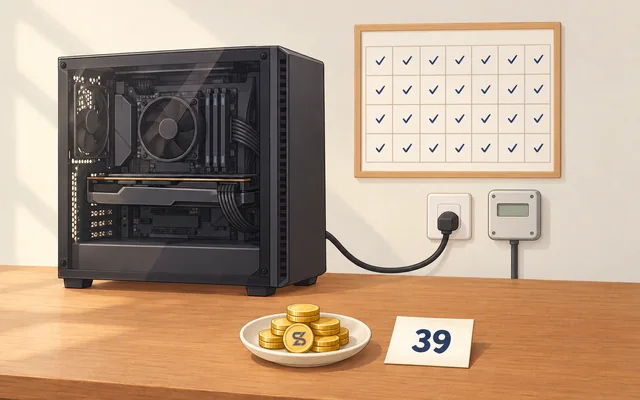
Try mining
Records from mining on one graphics card, setup guides, and how to work out the electricity cost.
-
SASEUL Mining Difficulty Fell From 800T to 385T and Climbed Back to 612T Within a Day and a Half, So How Much Does the Same Graphics Card's Share Change?
SASEUL mining difficulty was 800T in the record from 4 a.m. on November 15, then 385T on the official explorer at 5:22 p.m. on November 16, then 612T in the record from 7:49 p.m. that same day. The record from 8 a.m. on November 21 shows 677T. Here is how the share of the same graphics card changes in theory, date by date.

-
How Much Hashrate Does My Graphics Card Get on SASEUL?
On the front pages of the official explorer and three pool sites, I found no table of SASEUL hashrate by graphics card name (checked November 15, 2026). You can measure your own card on the mining program's screen in a few minutes, then divide it by the total hashrate estimated from difficulty, about 14.67 TH/s, to estimate your share.

-
Which Pays More on SASEUL, a Big Mining Pool or a Small One?
If the fee and the way rewards are split are the same, a big and a small SASEUL mining pool pay the same on average. What changes is how bumpy it feels. In the pool site's records, when the pool held 0.2% of the whole network in September, blocks came about 9 hours apart. At 4.2% on October 24, they came about every 24 minutes.

-
Why Does Daily Pool Mining Income on SASEUL Jump Around?
In SASEUL pool mining, rewards are shared only after the pool finds a block (one page of the ledger), so a day can pay nothing and the next can pay a lot. On the pool screen on November 6, 2026, blocks averaged about 3 hours apart, but the recent list showed gaps of 8, 15 and 32 hours. Judge by two-week stretches, not single days.

-
How to Read the SASEUL Official Explorer's Home Screen (Just Six Numbers)
The SASEUL official explorer's home screen has six boxes: main blocks, resource blocks, transactions, nodes, difficulty and interval. Here is what each one means, using the numbers on screen on November 5, 2026, plus how to check your own mining payouts.

-
Can I keep using my PC while mining SASEUL?
The SASEUL miner starts out using only 25% of your graphics card and yields often, so you can use your PC while it mines. Here is what the two sliders (GPU share and freeze limit) do when the screen stutters, and a record of going from 25% to 50%.
-
What Is Pool Hopping in SASEUL Mining?
Pool hopping means joining a mining pool only when the rewards look favorable and leaving when they don't. In proportional pools it can pay off, which is why schemes like PPLNS appeared. Here is what the SASEUL community pool saseulmine.com's guide says, and a record of its calculating speed going from 156 to 69.7 GH/s in about 21 hours.

-
SASEUL miner flagged by antivirus?
If your antivirus catches the SASEUL miner (miner.exe) or Windows says 'unknown publisher', that doesn't mean it's a virus. How to compare your file with the SHA-256 value on the pool site, and what to watch when you add an exclusion folder. Checked against the original pages on October 9, 2026.

-
What changed after mining SASEUL on one graphics card for 73 days?
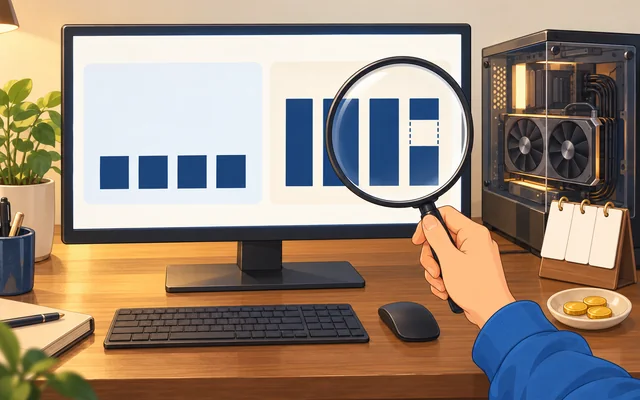
A 73-day log of mining SASEUL on one graphics card. Raising card usage from 25% to 50% made the hashrate jump three to four times, but the number of shares per day stayed about the same. In early October, timeouts went up and the miner shut itself off, but from October 15 it didn't shut itself off for 17 days.
-
SASEUL pool miner stopped overnight?
If the SASEUL mining you left running overnight has stopped by morning, check three things on the Windows side. Set sleep to Never, set your active hours or schedule the restart, and put a shortcut in the Startup folder so the miner opens again after a restart. Based on Microsoft's support docs.

-
How do you make a SASEUL Guardee wallet?
You make a SASEUL Guardee wallet at guardee.io by clicking the start button and then Create new wallet. Write the 16 words that appear on paper, copy your address from the wallet screen, and you're done. The wallet is stored only on that device, so keeping the words safe matters most.

-
SASEUL's total calculating speed tripled in 9 days, and why the same graphics card now earns less
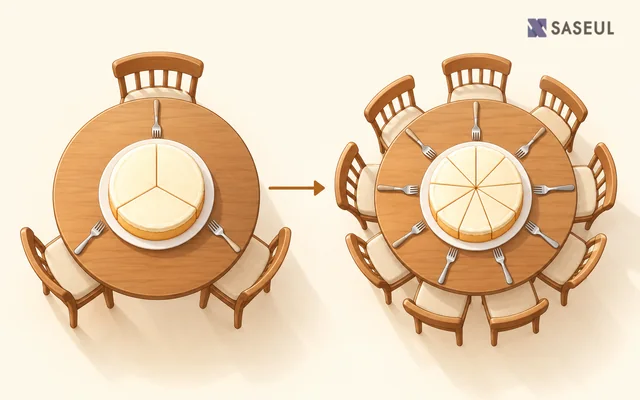
SASEUL's total calculating speed went from about 3.7 TH/s on October 24 to about 11.7 TH/s on November 2, roughly triple in 9 days. The amount of new SL stays the same, so the same graphics card gets about a third of the share. Here is how much it grew, why you get less, and the fact that we still don't know the reason, from the official explorer and the pool site.
-
Can You Mine SASEUL From Outside Korea?
Yes, you can mine SASEUL (SL) from outside Korea with an NVIDIA GPU. None of the three pools in the official notice states a country limit or asks for ID, and the Guardee wallet is listed in the US app stores. Selling works too: BitMart stopped trading, and since October 24, 2026 SL has traded on the Hyperliquid exchange (official notice #87), so check your own country's rules first.

-
SASEUL mining REJECTED going up?
In the SASEUL mining program, 'Stale share' means the pool moved on to the next job while your share was being found, and 'Timestamp out of range' means the time on the share was outside what the pool accepts. In a log from one graphics card run for over 7 weeks, 84% of rejections were Stale share.

-
SASEUL miner stopping by itself?
The SASEUL mining program sometimes shuts itself down. In a log from one graphics card it stopped 8 times, every time after sending a share to the pool and getting no answer. It doesn't come back on by itself, so check it once a day and press Start mining again.

-
Does Mining SASEUL at Home in a Pool Wear Out Your Graphics Card?
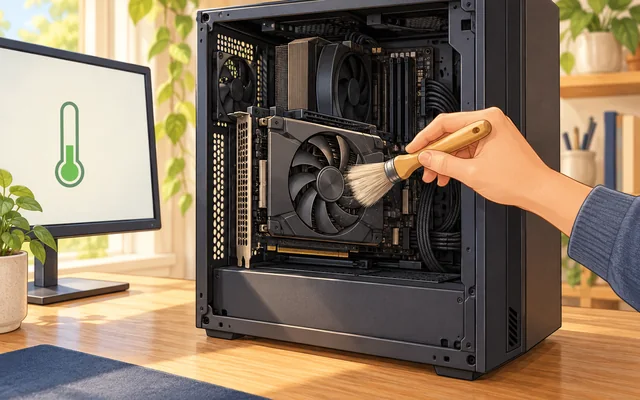
A pool doesn't wear your card out any faster. Pool or solo, the graphics card does the same calculations; a pool only changes how the reward is split. Run it for a long time and the fans, thermal materials and dust buildup are what wear, and keeping temperatures low cuts that a lot (checked October 16, 2026).
-
Which Coins Can You Still Mine With a Home GPU in 2026?
After Ethereum ended mining in 2022, a handful of coins still say they're GPU-mineable: Ethereum Classic, Ravencoin, Ergo and SASEUL, while Kaspa's own wiki says it's ASIC-only now. Compared by consensus method, minimum mining spec, ASICs and how coins were first handed out, checked on official pages on October 9, 2026.

-
If More People Mine SASEUL at Home, What Changes and for Whom?
Even if more individuals mine SASEUL through pools, the amount of new SL doesn't go up. Each miner's share gets smaller, and mining power gets more spread out. Using the official explorer and three pool sites on October 4, 2026, I split out what changes for mining farms, pool miners and people who just hold the coin.

-
What Is a Share in SASEUL Mining?
A share is the proof you send a mining pool that you really did the calculating. A SASEUL pool splits coins by the amount of work in your accepted shares, and shares that arrive late get rejected. In the record from one graphics card, around 5% were rejected.

-
What Happens to the Electric Bill If You Mine SASEUL on Idle PC Bang Seats?
What happens to the electric bill if you mine SASEUL on idle PC bang seats? It differs from shop to shop, so measuring it yourself is the most accurate way. If you run it alongside a PC that's on anyway, the new power is only the graphics card's share (about 55 W in the record). Here are the commercial power rates, a two-week one-seat measuring routine, and the catches: customer games, your contract, antivirus and tax.

-
How Do You Install the SASEUL Miner on Windows?
The 7 steps to install the SASEUL miner on a Windows PC with an NVIDIA graphics card, shown with 27 real screenshots and 1 example drawing, down to every button you click. Also covers what to do when a warning pops up and when the miner window stays blank white.

-
Can My PC Mine SASEUL?
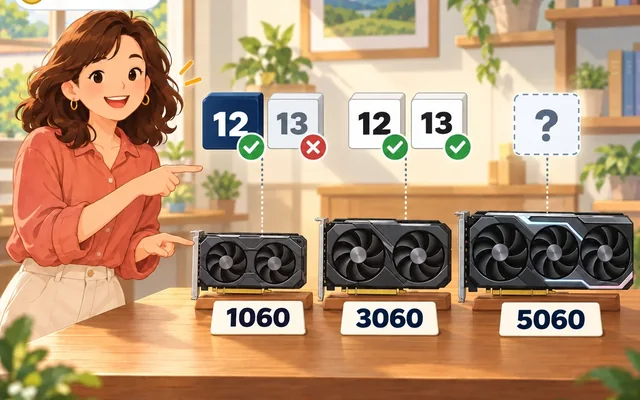
The SASEUL pool mining program runs on Windows and Linux computers with an NVIDIA graphics card. GTX 10 series cards work with CUDA 12, and GTX 16 and RTX 20, 30 and 40 series cards work with CUDA 12 or 13. Phones, Macs and AMD cards can't use it, and without a graphics card (CPU only) the pool mining program won't start. RTX 50 series cards, and how much the CPU node program can mine, couldn't be confirmed.
-
SASEUL GPU Mining Electricity Cost, How to Work It Out Before You Mine
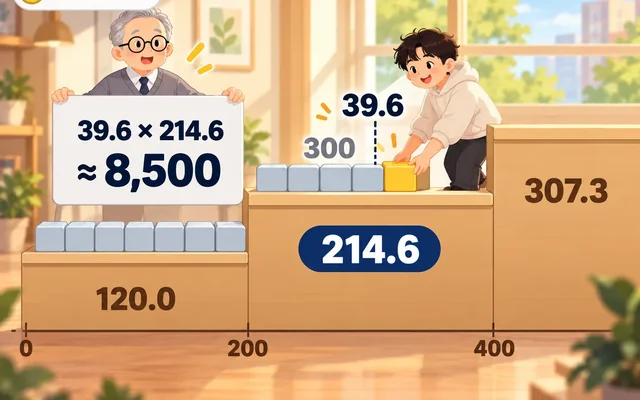
GPU mining electricity cost = extra watts × hours × price per kWh. A card adding 55 W all month uses 39.6 kWh, about 6,000 to 14,000 KRW on Korea's tiered home rates. Put in your own rate with the calculator here.
-
SASEUL (SL) Mining Setup on an NVIDIA GPU, Steps and the Common CUDA Snag
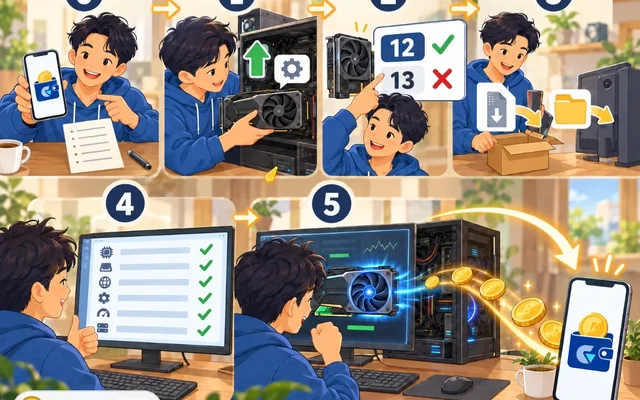
Mine SASEUL on one NVIDIA GPU: make a wallet address, install the driver and the right CUDA, enter the address and start. GTX 10 series cards need CUDA 12.
-
What Is a Mining Pool?
A mining pool mines together and splits coins by work added. Solo, one GPU at about 860 MH/s finds a SASEUL block about every 6 days on average, and weeks of nothing can happen.

-
What Is Hashrate?
Hashrate is how many guesses a GPU makes per second. One card in the record does about 800 MH/s, roughly 0.012% of SASEUL's 6.88 TH/s network on September 27, 2026.

-
SASEUL Miner CUDA Errors, CUDA or NVRTC Not Found and GPU Not Detected
CUDA or NVRTC not found, or GPU not detected? A version mismatch is one common cause. GTX 10 series needs CUDA 12, and CUDA must not exceed the CUDA Version in nvidia-smi.
-
How Much SASEUL Does One Older GPU Mine a Day?
28 days of mining SASEUL on one older GPU: about 670 SL in total, about 39 a day at 50% usage. Mining added 55 W (39.6 kWh a month), about 14,000 KRW at Korea's top rate.