Why Does Daily Pool Mining Income on SASEUL Jump Around? Rewards Arrive in Bursts After a Block Is Found

Why does a pool day sometimes pay zero?
Rewards are shared only after the pool finds a block
Your card keeps calculating
Same work every day
The pool finds a block
When is a matter of luck
Your share arrives at payout
Bunched up after a find
When a pool day pays zero, it is often not a fault. The pool is paid only after it finds a block (one page of the ledger), and blocks do not arrive evenly. So I think it is better to look at about two weeks added together, not at one day.
A pool is paid only when it finds a block
A pool (a group that mines together and shares the reward) combines everyone's calculations to solve the puzzle. When it solves it and finds one block, the reward goes to the pool.
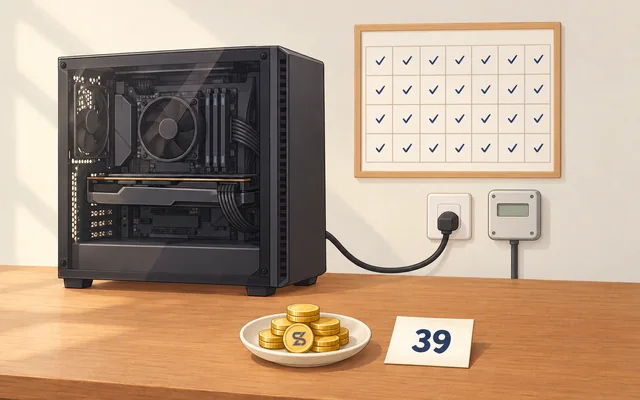
Your card works the same every day, but when the pool finds a block is luck. It is like buying the same number of lottery tickets every day while the winning days still come unevenly.
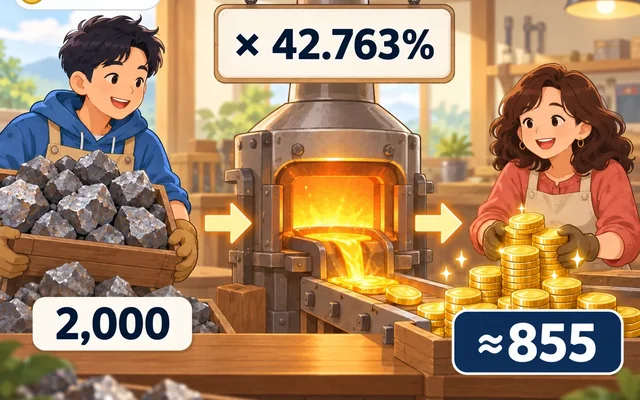
The pool site says it splits rewards like this: 80% to miners, 10% to whoever referred them, 10% to the pool. The miners' part is split "by the work each address did" (saseulmine.com, checked November 6, 2026). On a day with no block, there is nothing to split.
Blocks do not arrive evenly
At 5:32 a.m. on November 6, 2026, the pool's front page showed "AVG TIME TO BLOCK ≈ 3 h" (the average time to find one block, about 3 hours). The total number of blocks found so far was 389.
But the gaps in the recent block list are uneven. The latest block was 8 hours ago, the one before 15 hours ago, the one before that 32 hours ago, and two came bunched together 36 hours ago.
So even with a 3-hour average, you can go more than half a day with nothing. A month can mix rainy and sunny days and still have an average rainfall.
Picture a rain barrel in your yard. Some days no rain falls and it stays empty, other days a downpour fills it at once. Looking at one day's water, it seems broken. Add up a month and it comes out about even.
Pool mining works the same way. Income bunches up on the days a block turns up, and the other days are empty.
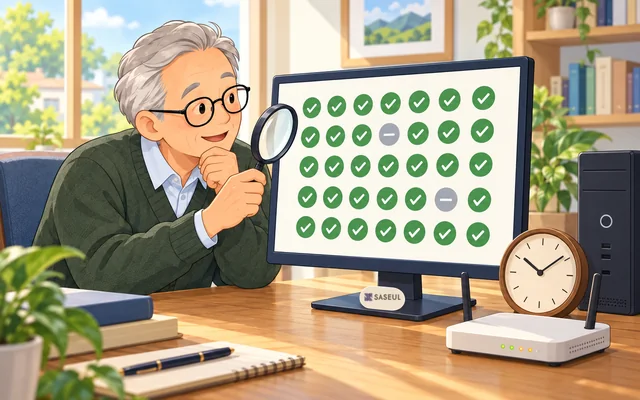
Here is my own record. Over 13 days with one graphics card, there were three days with nothing at all, and one day when about 150 came in at once. Added up and divided over the 13 days, it came to about 39 a day (one-month mining record).
Payouts make the bunching look worse
The day a block is found and the day it reaches your address can differ. The pool holds the coins and sends them at payout time (when the pool distributes the coins it mined). The pool site says "amounts under the minimum roll into the next payout" (checked November 6, 2026).
The pool screen also shows its payout history. As of November 6 there had been 76 payouts, the latest 18 hours earlier. It lists 714 on-chain transfers (sends recorded on the SASEUL ledger) to 45 addresses.
So shares carried over from earlier days get mixed in, and one day looks big while another looks like zero. Deposits to your address stay on the SASEUL ledger, so you can match dates in the explorer.
But a long run of zero days can be a real problem
If zero lasts several days, you need to tell apart "no blocks were found" from "something is wrong on my side". The pool screen shows the difference. Whether your card is actually sending its calculations to the pool shows in the miner program's rejection log.
If you see many rejections, the stale share post covers the causes, and the post on the miner stopping by itself covers that case. How rewards become SL is in how mining rewards work.
So what should you do? Look at a two-week average
- Write down each day's deposit, but do not judge by it
- Add up 14 days of deposits and divide by 14 for a daily average
- If the recent block gaps on the pool screen are long, call it a "no block" stretch and wait a few more days
- If blocks keep coming but your share stays at zero, check the miner program's rejection log
- When you compare with your electricity bill, use this average, not a single day. The method is in the one-month mining record
For the basic numbers, see SASEUL basics.
Sources
- SASEUL Mining Pool front page (AVG TIME TO BLOCK ≈ 3 h, BLOCKS FOUND 389, recent block list, SETTLEMENTS RUN 76, ON-CHAIN TRANSFERS 714, ADDRESSES PAID 45) · a community pool, not run by SASEUL officially, checked 2026-11-06 05:32
- SASEUL Mining Pool download guide ("Getting paid": 80%, 10%, 10%; "Amounts under the minimum roll into the next payout") · checked 2026-11-06 05:32
- One-month mining record post (13-day record, this blog) · 2026-09-16
This is a how-to, not investment advice. I hold SL. I read the pool numbers myself from the pool site screen at around 5:32 a.m. on November 6, 2026.