What Is a Share in SASEUL Mining? It's Your \"Proof of Work\" Sent to the Pool

What is a share in a mining pool?
One piece of proof that you calculated, and you're paid by the work in it
The graphics card guesses answers
Hundreds of millions a second
An answer that clears an easy bar
That's a share
The pool accepts or rejects it
Around 5% rejected in the record
Split by the work in each share
The miners' 80% share
A share is the "proof of work done" you send to a mining pool (a group that mines together and splits the coins). The pool counts the work in that proof and splits the coins in that proportion.
Because it's proof, it gets rejected if it arrives late or doesn't meet the conditions. In a record from one graphics card running for more than 4 days, around 5% were rejected.
So what to watch in the mining program is whether accepted shares keep climbing. If they do, your share of the work is piling up. A single share's weight (the amount of work in it) can differ from time to time, so it's hard to compare counts with other people.
A share is what the pool asks for because it can't see your calculating
The pool can't look inside someone else's computer. So it needs a way to check "did you really calculate?"
Mining is a lottery-like hunt for the answer that lets you attach a block (one page of the record book). Real winning answers are very rare. If you only counted winning answers, most people would have zero all day long, and the work done couldn't be measured.
The saseulmine.com guide also says it splits "by the work each address did" (Split by the work each address did). The unit that counts that "work" is the share.
Only answers that clear a bar much easier than the real one count as shares
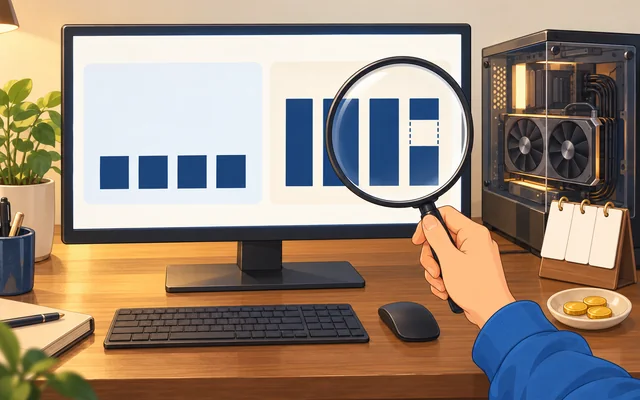
Proof of Work pools usually work like this. They set one more bar, much easier than a real win. When an answer clears that bar, it gets sent to the pool.
It's like handing in test papers. A perfect score is rare, but papers above 70 come up often. The person who hands in lots of papers above 70 is the one who studied a lot.
For example, say a real win comes once in a million tries and the easy bar once in 1,000. Someone who makes 10,000 guesses sends in about 10 shares. With the same bar, the number of shares is proportional to the amount calculated.
When splitting, the work in each share matters more than the share count
When the pool finds a block, the coins it receives belong to the group. It doesn't matter who found the real answer.
saseulmine.com says it splits 80% to miners, 10% to referrers and 10% to the pool. It says the miners' 80% is split "by the work done" (Split by the work each address did). Amounts below the minimum roll over to the next payout.
Each time the mining program sends a share, it logs a "difficulty adjusted to …" line (the bar for shares was changed). So even for the same graphics card, calculating speed and the number of accepted shares weren't exactly proportional. In August, when use was set to 25%, and September, when it was raised to 50%, the average daily calculating speed differed by more than 3 times, but the accepted shares per day were similar, about 6,300 to 7,200 and about 7,300 to 7,500.
So it's good to know that a single share's weight (the amount of work in it) can differ from time to time. Rather than comparing share counts with others, it's more accurate to watch whether your own ACCEPTED keeps climbing and coins are coming in.
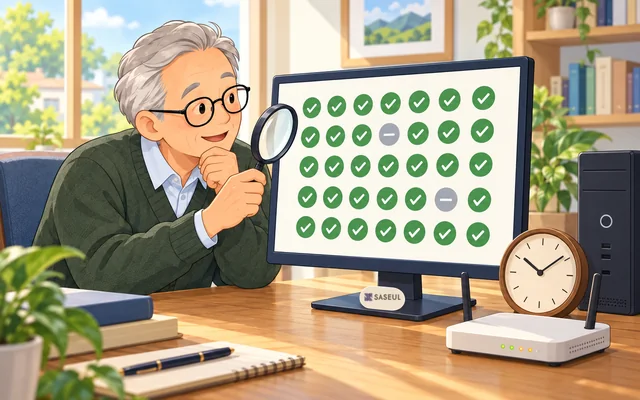
Shares that arrive late or don't meet the conditions are rejected, around 5% in the record
A share that arrives late isn't counted.

In a 28-day record on one graphics card, the first 2 hours or so had about 680 accepted and about 50 rejected. That's a bit over 7%.
On the September 15 screen after more than 4 days, there were about 32,000 accepted and about 1,700 rejected. That's about 5%.
Rejected shares also used electricity to calculate. So the rejected portion is wasted electricity. Dividing 32,000 by about 4 days gives roughly 5 to 6 shares a minute.
Check the share numbers on the miner's Mine tab every day
At the bottom of the SASEUL mining program's Mine tab you'll see ACCEPTED (accepted shares) and REJECTED (rejected shares). If ACCEPTED keeps climbing, you're mining well. If it's stuck, see "What should I look at after I start mining?" in the mining guide.
Shares are a number counted inside the pool, so they aren't recorded in the ledger. Check the coins you actually received on the official explorer with your wallet address.
What a pool is, is covered in What is a mining pool, and SASEUL's basic numbers are in SASEUL basic facts.
So what should you do? Once a day, just check ACCEPTED and the coins you received
- On the mining program's Mine tab, check that ACCEPTED is going up. If it's stuck, follow the checks in the mining guide
- If the share of rejected shares is much higher than the 5 to 7% in the record above, check your internet connection first, in case shares are arriving late
- After a day, check the record of what you received on the official explorer with your wallet address
Sources
- saseulmine.com download screen (Getting paid: TO MINERS 80% "Split by the work each address did", referrers 10%, pool 10%, "Earnings follow the work your miner sent in", "Amounts under the minimum roll into the next payout") · checked 2026-10-04 07:13
- SASEUL mining program Mine tab screen (ACCEPTED, REJECTED) · 2026-09-15, the same screen shown in the one-month record and the mining guide
- Mining program log from one graphics card (2026-08-18 to 10-09): daily calculating speed and accepted shares at 25% and 50% use, "difficulty adjusted to" lines · compiled 2026-10-09
- Shares per minute: about 32,000 ÷ (about 4 days × 1,440 minutes) ≈ 5.6
I hold SL. I checked the pool figures on the saseulmine.com download screen on October 4, 2026, and the share records on the September 15 mining program screen and the August 18 to October 9 mining program log.