How Much SASEUL Does One Older GPU Mine a Day? 28-Day Log and Power Cost
A record of 28 days of mining with one graphics card
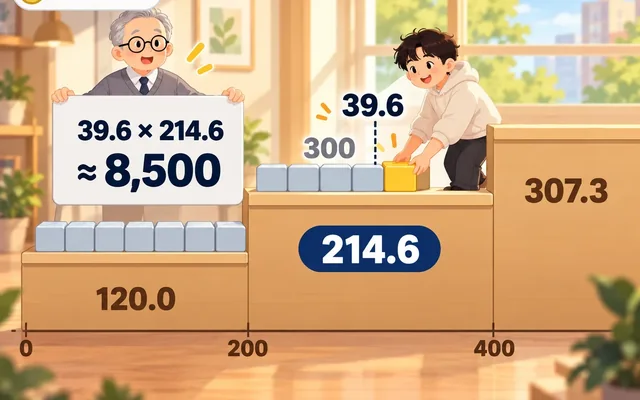
55 W more electricity, about 39 coins a day
One graphics card
Home computer, card use set to 50%
Electricity +55 W
39.6 kWh a month
39 a day on average
13 days fixed at 50%, including three days with none
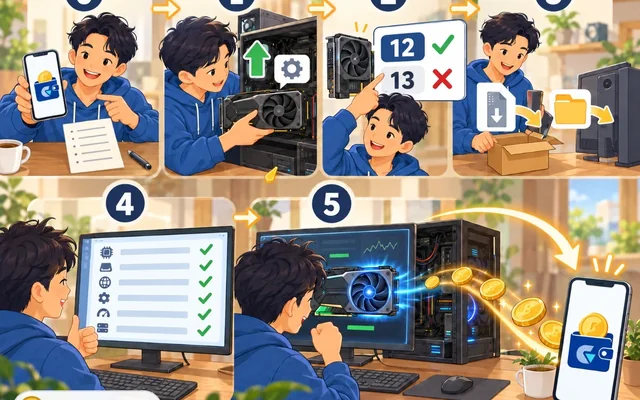
There's a record of running SASEUL for 28 days on one graphics card a few years old. In that time, about 670 SL came in altogether. SL is the name of the SASEUL coin.
After card use was fixed at 50%, it came to about 39 a day. The extra electricity was 55 W. For a home on step 3 of tiered electricity rates (billing where 1 kWh costs more the more you use), that's about 14,000 KRW (Korean won) a month, about the price of one fried chicken delivery in Korea.
Right now there's no confirmed official exchange where you could turn the SL you receive into money. People do seem to trade it among themselves (OTC), paying in Korean won, on places like Naver Cafe boards in Korea (Naver is Korea's biggest web portal; checked September 27, 2026), but that isn't an official exchange.
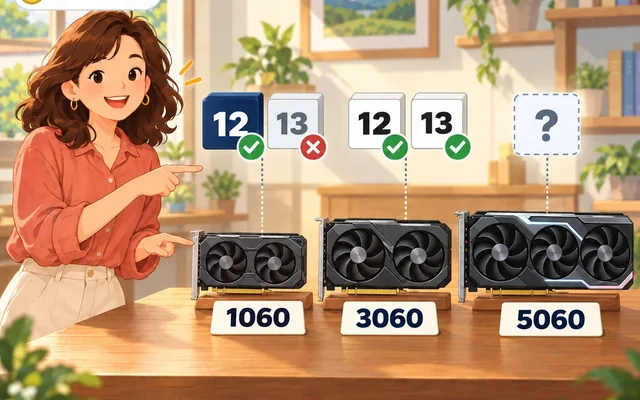
There's no special mining machine. Just one graphics card that was sold for gaming. I'd guess cards around the 1060, 1070, 2060 or 3050 class (all NVIDIA graphics card names) would run about the same. But 10 series cards like the 1060 and 1070 need version 12 of CUDA (NVIDIA's program that lets the card do calculating jobs). NVIDIA dropped support for that generation starting with version 13.
The period is 28 days, August 18 to September 15. The electricity is a measured value, and the coin count is exactly what came in to the wallet.
What kind of coin is SASEUL?
It's a coin that only comes out new through mining. That's what the project description on CoinMarketCap (a site that gathers coin information) says.
It also says no coins were sold in advance to raise money before launch (no ICO or presale). If the project description is right, that means there's no pile of coins made early and sold off. I couldn't check it directly on the record book.
It has been running officially since May 2022. Transaction records are still being added. That matters too, because mining is no use if the record book stops.
And you can mine it with a graphics card you have at home. Since Ethereum ended mining in 2022, there haven't been many coins worth mining with a card like this. Bitcoin is hard without a special mining machine.
Nobody knows what will happen from here. It could disappear, or it could keep going as it is.
What computer did the record come from?
An ordinary home Windows 10 computer with one graphics card in it. The details are in the box below.
The program versions behind the record
- Windows 10
- The basic program that makes the card work (driver) 581.80
- The NVIDIA program that lets the card do calculating jobs (CUDA) 13
The mining pool (a group that mines together and splits the coins) is a place called saseulmine.com. Its site says it isn't an official SASEUL pool. It's an unofficial users' pool (a community pool).
How much more electricity does it use?
55 W more. When not mining (with just the computer on), the graphics card used about 10 W. With mining on, it averaged 64 W. So mining adds 55 W.
The electricity cost should be worked out with this 55 W, not 64 W. The temperature was 44 to 50°C before mining and 55 to 60°C while mining.
The power was recorded every 5 seconds with NVIDIA's card check program. All of it is at the 50% card use setting.
The 50% setting doesn't run the card at half strength. It runs flat out, then rests, over and over. Measured, it keeps jumping between 39 W and 110 to 120 W.
The program log showing the rest breaks
The mining program's log shows it resting 113 milliseconds (about one blink of an eye) every 8192 calculations. My guess is that this rest break is also why the power jumps between 39 W and 110 to 120 W.
Measuring power in the black window (Command Prompt)
With mining on, type the line below into Command Prompt. nvidia-smi is a command that shows an NVIDIA card's power and temperature. Every 5 seconds it prints one line with the power, usage and temperature.
nvidia-smi --query-gpu=power.draw,utilization.gpu,temperature.gpu --format=csv -l 5
Why is the electricity cost different for every home?
Because household electricity in Korea uses tiered rates. Even for the same extra electricity, each home pays a different price per unit.
55 W for 24 hours is 1.32 kWh a day, or 39.6 kWh over 30 days. kWh is the unit of use printed on your electric bill. To work it out for your own bill, multiply 39.6 kWh by your price per kWh, then add your utility's other charges and taxes. The chart below includes those for Korea.
Mining electricity sits on top of what you already use. So using the average price gives the wrong answer. It's charged at the most expensive step you land in that month.
How much a month's electricity bill goes up in Korea (39.6 kWh)
How the step amounts were worked out is in how to work out the electricity cost.
How many coins actually came in over 28 days?
About 670 SL in 28 days, about 24 a day on average.
But this average mixes settings. The record shows it started at 25%, went up to 100% for a while, and was then fixed at 50%.
So the 13 days from September 2 to 14, after it was fixed at 50%, are shown on their own. These are exactly what came in to the wallet.
Coins received per day, September 2 to 14 (SL, card use fixed at 50%)
Look at just the seven days from September 2 to 8 and it seems like about 55 a day. That's because about 150 and about 130 came in at once, twice. The six days from September 9 to 14 averaged about 21 a day, and one day had nothing.
Over all 13 days, it's about 510 ÷ 13, or about 39 a day. Judging from just a few days is easy to get wrong.
Why about 39 a day
Working from the mining difficulty on the official node for September 2 to 14, 2026, all of SASEUL averaged about 13.7 TH/s. For one card at about 860 MH/s, with miners getting 80%, the calculated figure is about 62 a day, but the real figure was about 39.
What the card got was around 5% of what the pool paid out, which matches its share of the calculating speed. The pool itself mined only a little over half of the calculated amount in this period. I couldn't find out why from public sources. Over a short period, the number of record book pages a small pool finds swings a lot with luck.
How much electricity does it take to mine one SL?
For a home on step 3, between 12 and 20 KRW. Divide the month's electricity cost by the number of coins received.
| Electricity price step (Korea) | Electricity per coin at 39 a day (KRW) | Electricity per coin at 24 a day (KRW) |
|---|---|---|
| Step 1 | 5.1 KRW | 8.3 KRW |
| Step 2 | 8.5 KRW | 13.9 KRW |
| Step 3 | 12 KRW | 20 KRW |
39 counts only the time after it was fixed at 50%. 24 includes the days when the setting was being changed. Fixed at 50%, it's closer to 12 KRW. Counting the days when the setting was being changed, it's 20 KRW. So on step 3, figure 12 to 20 KRW.
This counts electricity only. Running 24 hours a day also wears out the material that carries heat off the fan and chip (thermal paste). The card's resale value drops too, so counting those, each coin costs more.
What were the calculating speed and the rejected shares like?
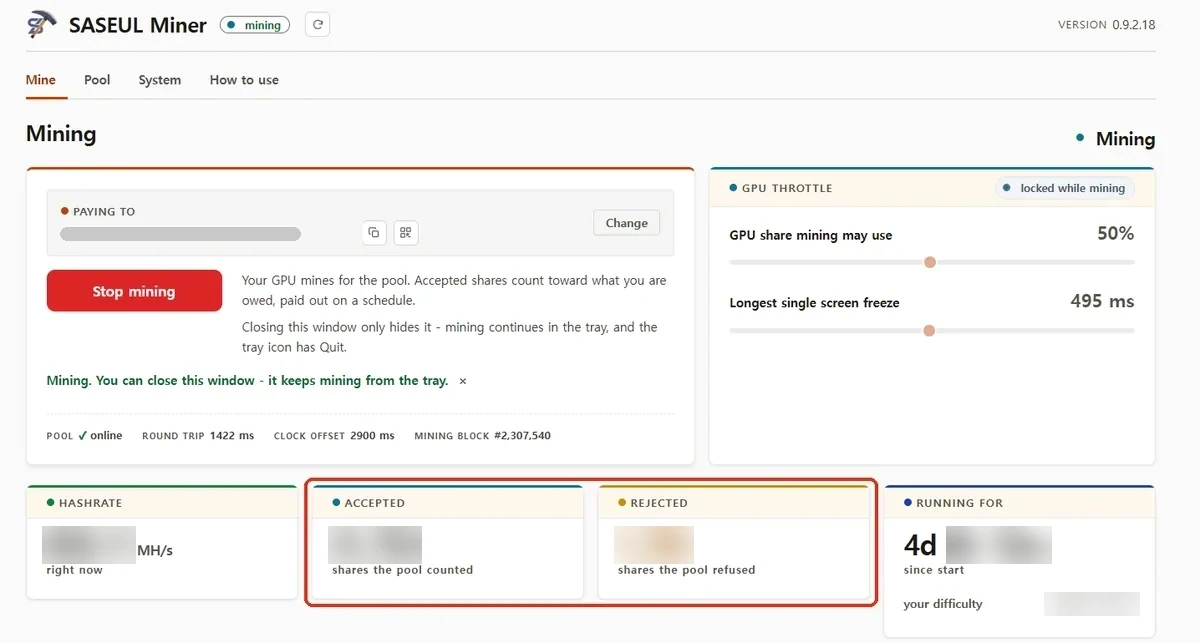
The hashrate (calculating speed) at 50% is usually around 800 MH/s. That means about 800 million guesses a second. It doesn't sit still. It keeps moving between 680 and 890, and at the September 15 screenshot it was about 860 MH/s.
A share (a receipt for the work you add to the pool) gets rejected if it arrives late or doesn't meet the rules. This record had a fairly high number of rejections.
In roughly the first 2 hours, about 680 were accepted and about 50 rejected, a little over 7%. That's about 7 out of every 100 sent being thrown away.
On the September 15 screen, after more than 4 days, about 32,000 were accepted and about 1,700 rejected, about 5%.
The reason is unknown. The round trip to the pool is long. At the first check it was about 750 ms (under 1 second), and at the screenshot it was 1,422 ms (over 1 second).
So my guess is the answers are arriving late. Either way, every rejected share is wasted electricity.
Can you use the computer while it's running?
It depends on the card use setting. The lower the setting, the more often the mining program lets go of the card, so it's easier to use the computer with mining on.
- 25%: the program's default. It lets go of the card most often
- 50%: the setting in this record
- 100%: it uses the card without a break. Calculating speed goes up, but it uses more electricity and the fan runs harder
There's no record of gaming while it ran, so how it does during games is unknown.
How long it holds the card at a time
This record had the mining program holding the card for at most 0.5 seconds (495 ms) at a time. The shorter it holds the card, the easier it is to browse the web or work on documents while mining.
The program's default is 25%. It's best to use it that way for a few days before raising it.
Can you trust this pool?
Anyone can check for themselves whether coins come in. But the pool is very small.
Every coin the pool hands out is recorded in the coin's record book. So you can check it yourself on the block explorer (the official website that shows the record book so anyone can look).
Each download has a SHA-256 value listed (a value for checking whether a file is the same one). You can compare it to see whether your file is the same one the site posted.
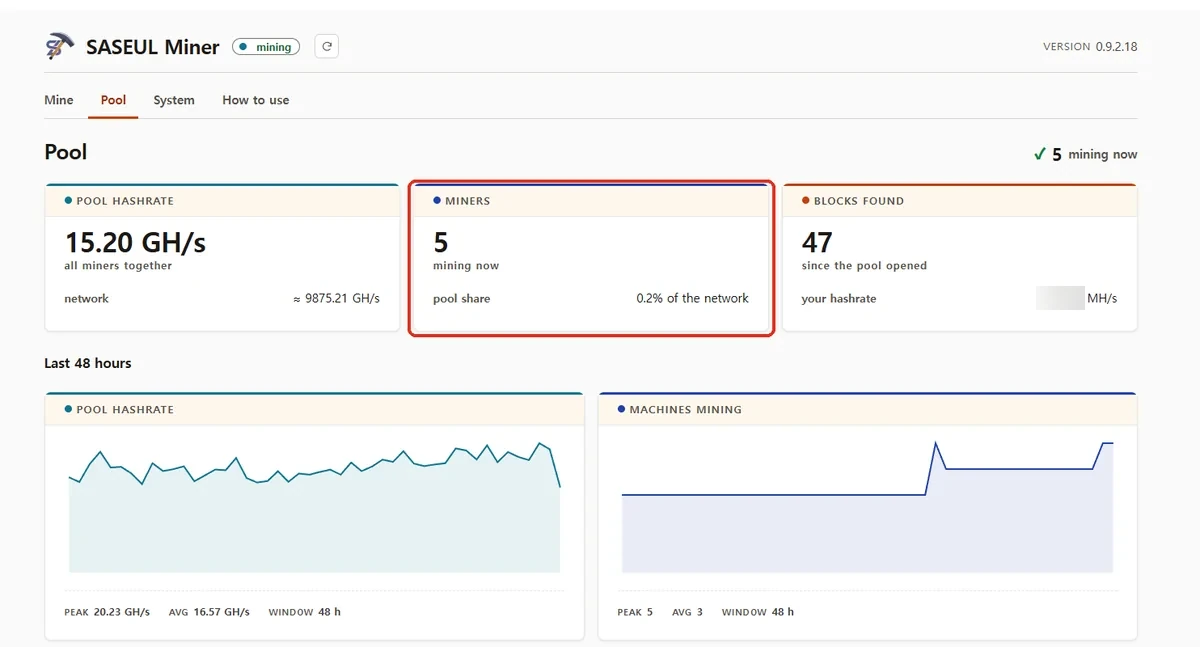
At the September 15 screenshot, 5 people were mining. The whole pool was 0.2% of all of SASEUL's calculating power, or 2 people's share out of 1,000.
The 0.2% on the screen is rounded. Divide the pool's 15.20 GH/s by the network's roughly 9,875 GH/s and you get about 0.15%. With that share, the math says the pool needs about 11 hours on average to make one new page of the record book.
That's why the days you get coins are so uneven.
What if you have several cards?
You can get a rough idea by multiplying the one-card numbers. But there's no record of actually running several cards. All the numbers so far are for one card.
Going by the September 15 screen, this one card is around 5% of this pool. Twenty cards like it would make up the whole pool, and that pool is 0.2% of all of SASEUL.
How many of these cards would all of SASEUL be?
On September 15, the mining program's pool screen (Pool tab) showed the calculating speed of all of SASEUL as about 9,875 GH/s. Divide that by this one card's speed (about 860 MH/s) and you get about 11,500 cards.
On September 27, 2026, the calculating speed of all of SASEUL was about 6.88 TH/s. Divided the same way, that's about 8,000 cards. The official block explorer (Statistics screen) shows 6.26 TH/s, which is the same value written in units of 1,024 multiplied four times (about 1.1 trillion).
The September 15 number from the mining program is worked out the same way as the explorer's. Calculate it from the September 15 record kept on the official explorer and it matches to two decimal places. So the two days can be compared directly.
From about 9.88 TH/s on September 15 to about 6.88 TH/s on September 27, the calculating speed of all of SASEUL dropped by about 30%.
The electricity in this record is Korean home electricity on step 3, the most expensive step. Korean electricity for businesses (shops and offices) isn't tiered. By KEPCO's rate table, 1 kWh costs less than step 1 in the table in spring and autumn, about the same in winter, and a little more in summer (June to August).
A place that already keeps several computers on around the clock is already paying for the 10 W they use while idle. Then only the 55 W needs counting.
At 39 a day per computer, twenty would make 780 a day, with no tiered rates. That's a number from multiplication. There's no record of twenty cards actually running, so if that's your situation, work it out with your own conditions.
If you have a spare card sitting idle, it's worth a try. It's not the kind of thing to buy new hardware for. How to set it up is here.
If you have a question, ask through the tip form.
Sources
- Power and temperature: nvidia-smi records every 5 seconds · 2026-08-18 to 2026-09-15
- Coins received: payout records of the mining wallet · 2026-08-18 to 2026-09-15
- SASEUL Miner mining screen and pool screen · 2026-09-15
- saseulmine.com (a community pool, not an official SASEUL one) · 2026-09-15. Front page FAQ "When do I get paid?" (one payout a day, amounts below the minimum go to the next payout) · checked 2026-09-27
- Official SASEUL explorer Statistics (shown as about 6.26 TH/s = about 6.88 TH/s in standard units) · checked 2026-09-27 09:23
- saseulmine.com front page (network about 6.88 TH/s) · checked 2026-09-27 09:45
- Official SASEUL explorer, resource block #2,307,600 (2026-09-15 12:06 KST, difficulty 592,512,823,647,550 ÷ 60 ≈ 9,875.21 GH/s. The same value is in the Difficulty History on the Statistics page) · checked 2026-09-27
- Official SASEUL node main.saseul.net, mining record lookup (round API, difficulty for September 2 to 14, 2026) · queried 2026-09-30
- saseulmine.com front page (amounts the pool paid out) · checked 2026-09-30
- CoinMarketCap SASEUL project description · 2026-09-23
- NVIDIA CUDA Toolkit release notes (Maxwell, Pascal and Volta support removed in CUDA 13) · checked 2026-09-27
- KEPCO rate table, household power (low voltage) (in Korean, applied from November 9, 2023, base charges 910 / 1,600 / 7,300 KRW) · checked 2026-09-27
- KEPCO rate structure (in Korean: climate and environment charge 9 KRW/kWh, fuel cost adjustment 5 KRW/kWh, VAT 10%, power fund) · checked 2026-09-27
- KEPCO rate table, general power (A) I (in Korean, applied from November 9, 2023, low voltage per kWh: summer 132.4, spring and autumn 91.9, winter 119.0 KRW) · checked 2026-10-01
The wallet address in the screenshots is covered.