Can AI Hack a Blockchain Ledger? What Gets Targeted Is People, Not the Ledger: How to Protect Your Recovery Phrase

Can AI hacking break a blockchain ledger?
People get targeted before the ledger does
Wallet keys
No case of AI cracking them found
Rewriting the ledger
Takes over half the mining computers' power
Deceiving people
Fake notices, fake support agents, cloned voices
Program bugs
Research on AI finding them has appeared
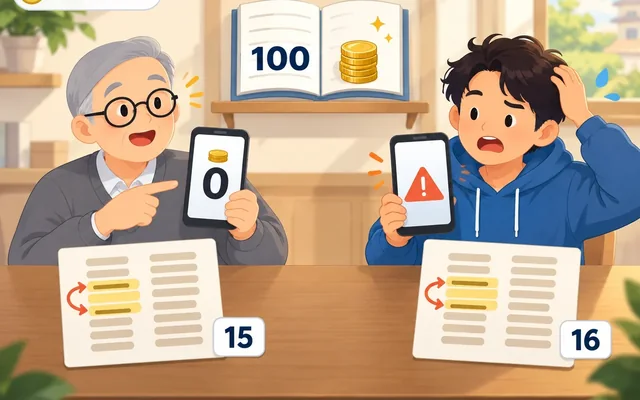
I found no report that smarter AI has cracked blockchain encryption. Changing a blockchain ledger by hacking is close to impossible in practice. Overturning a ledger by force is also decided by the number of computing machines, not by AI. The same goes for SASEUL.
Where AI really becomes risky is deceiving people and finding mistakes in programs. So protecting your coins starts with keeping your recovery phrase only in your own hands.
I found no report of the keys that protect wallets being cracked by AI
A wallet is protected by a private key (a wallet's password and seal in one). The SASEUL official site FAQ says each transaction carries a digital signature (an electronic seal) matching the sending address.
In an August 13, 2024 post, the US standards agency NIST explained that encryption rests on math problems that are hard or impossible to solve on ordinary computers. AI is also a program running on ordinary computers. My view is that AI getting good at writing doesn't make these math problems easier.
Quantum computers are a different story. In the same post, NIST released new encryption standards that stand up to quantum computers and said to start moving over now.
Overturning a ledger by force takes over half the mining computers' power, not AI
An attack that changes a ledger at will is called a "51% attack." One side has to hold more than half of the mining computers. That's a matter of the number of machines and computing power. AI being smart doesn't add computing machines.
Where AI is really dangerous is fake notices, fake support agents and cloned voices
AI makes deceiving people cheap and fast. In a December 3, 2024 advisory, the US FBI said criminals use generative AI to write text for crypto investment scam sites. It also said they put AI chatbots on fake sites to get people to click bad links.
Voices get cloned too. The FBI warned about a trick where a short clip imitating a family member's voice demands urgent money. Korea's Financial Supervisory Service also issued a consumer alert on January 26, 2026. It's a scam that uses AI deepfakes (fake video and voices) to impersonate securities firm staff and get people to install a fake trading app.
Contacts like "This is customer support" or "We'll help check your wallet" can easily be made convincing with these tools. That's true for any wallet.
Research has also appeared on AI finding mistakes in blockchain programs
AI is also used to find mistakes (bugs) in programs. In a December 1, 2025 post, researchers at the AI company Anthropic published a test of AI finding weak spots in small programs on a blockchain (smart contracts). They tested on a simulated ledger rather than a real one, and they recommended using this tool for defense: finding and fixing mistakes before attackers do.
On SASEUL, a block is valid only when 6 of the 9 validator seats sign
On the SASEUL ledger, one computer can't write alone. Nodes (computers that each hold a copy of the ledger) that succeed at mining take turns as validators (a role that checks and signs transactions). The CoinMarketCap project description says a block is valid when 6 of the 9 validator seats sign.
Validator seats change with mining results. So to hold validators, you'd need a lot of mining power in the end. The detailed structure is in the two-ledgers post.
The node software's blueprint (source code) has an open-source plan on the roadmap
The node software isn't open source yet. Nodes are handed out as a bundle file on Docker Hub, and its page says "SASEUL is not open source".
The roadmap in CoinMarketCap's SASEUL description has an "Open Source Transition" plan in the December 31, 2026 slot. It says it will release the code once no further fixes are judged necessary after the hard fork (the big update to node software version 2.3, see the hard fork post), and it hasn't been decided when it will actually happen. That doesn't mean the blueprint has to be public for things to be safe.
So what should you do? If you give your recovery phrase to no one, your coins stay protected
The SASEUL official FAQ says responsibility for security and management lies entirely with the individual user. In notice #57 of May 16, 2024, the SASEUL team said it doesn't keep users' private keys separately. That means the team has no reason to ask for your recovery phrase.
- Never tell anyone your recovery phrase (a set of English words that brings a wallet back) or private key. That includes AI chatbot windows, "wallet check" sites and people who say they're support agents. Restore a wallet yourself on your own phone, as in the Guardee wallet restore post
- Compare official addresses one character at a time. There may be fake addresses that change just one letter. The real addresses are on the SASEUL official channels page
- Don't follow pitches like "AI mines for you" or "AI auto-trading earns every month" that ask you to hand coins or money to a company
- If someone asks for urgent money in a family member's voice, hang up and call back on a number you know. The FBI recommends setting a secret verification word within the family
The basics are on the SASEUL overview page.
Where to check for yourself
- At the top of the artifriends/saseul-network page on Docker Hub, you can see the "not open source" sentence
- Update and announcement news is on the official Telegram notice channel (t.me/s/saseul_notice), no login needed
Sources
- SASEUL official site · FAQ (a digital signature on each transaction, security and management responsibility lies with the individual user) · checked 2026-10-04
- Docker Hub · artifriends/saseul-network ("SASEUL is not open source", page's last update shown 2026-07-28) · checked 2026-10-04
- SASEUL Docs · Node Overview (two ledgers, nodes that succeed at mining act as validators) · revised 2026-03-09, checked 2026-10-04
- CoinMarketCap · About SASEUL (6 of 9 current validator seats sign, roadmap 2026-12-31 "Open Source Transition") · the project's own description, checked 2026-10-04
- Official SASEUL Telegram notice #57 · mainnet 2nd anniversary, private keys not kept · 2024-05-16 23:13 (Korea time), checked 2026-10-04
- NIST · "NIST Releases First 3 Finalized Post-Quantum Encryption Standards" · 2024-08-13, checked 2026-10-04
- FBI Internet Crime Complaint Center (IC3) · "Criminals Use Generative Artificial Intelligence to Facilitate Financial Fraud" · 2024-12-03, checked 2026-10-04
- Metro Seoul · FSS issues "deepfake leading room" alert: beware scams impersonating securities firm staff (Financial Supervisory Service consumer alert of 2026-01-26, as reported) · 2026-01-26, checked 2026-10-04
- Anthropic Frontier Red Team · "AI agents find $4.6M in blockchain smart contract exploits" (tested only on a simulated ledger, recommended for defense too) · 2025-12-01, checked 2026-10-04
I hold SL. I opened the SASEUL notices, FAQ, Docker Hub page, US agency guidance and the research post myself on October 4, 2026.