Would Putting Concert Tickets on a Blockchain End Ticket Scalping? How It Works, Real Cases and the Limits
Would putting concert tickets on a blockchain end scalping?
It can block deals inside the record book, but not deals outside it
Booking
Only a set number per person
Owner on the record book
Seat, owner, price paid
Resale only at the official counter
Only up to a set price
Entry check
Record book owner matched with ID
It can stop people from reselling for a profit, but it can't stop deals made outside the record book. Put tickets on a blockchain (a record book that lots of people hold together) and you can narrow resale down to one official counter and cap the price too. That makes selling tickets online at a markup hard.
Still, if someone hands over the phone or the account the ticket is on, that deal doesn't show up in the record book. Even the Hyundai Card concerts that actually tried this checked ID separately at the door.
Why does ticket scalping happen?
There are few seats, lots of people who want to go, and the ticket price is fixed. Buy at face value, sell high, and you pocket the difference.
So when tickets go on sale, some people use macros (programs that repeat the same input automatically) to sweep them up. In its own survey, released at a September 17, 2026 forum, a Korean association of the pop music concert industry counted 129,528 scalped ticket deals from January to August 2026.
In the same survey, the singer with the highest average markup was at about 470,000 KRW per ticket. In 2026 there were also workarounds, like reselling on overseas sites or putting the markup on merchandise instead of the ticket.
Korea's laws have changed over time too. From March 22, 2024, reselling tickets bought with a macro at a markup could bring up to 1 year in prison or a fine of up to 10 million KRW. Before that, under Korea's Punishment of Minor Offenses Act (passed in 1954, with the scalping clause added in 1973), only on-the-spot sales could be fined, up to 200,000 KRW.
People kept pointing out that it's hard to prove a macro was used. So Korea's amended Public Performance Act, passed by the National Assembly on January 29, 2026, bans buying tickets to resell whether or not a macro was used. It also bans selling above the price paid without the seller's consent, when it's done repeatedly or as a business. The law has been in force since August 28, 2026, and it allows a penalty charge (money the government makes you pay, a bit like a fine) of up to 50 times the sale amount.
What changes with a blockchain?
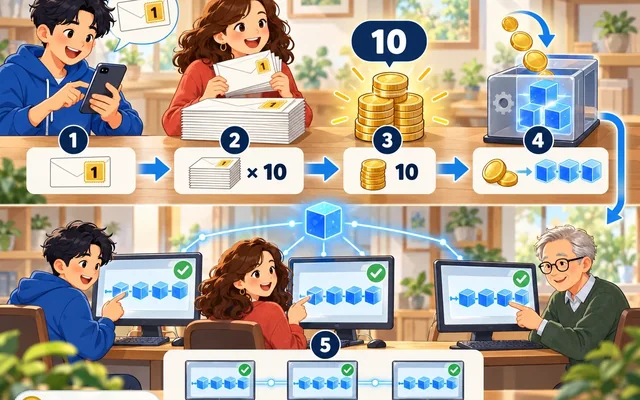
Each ticket becomes one line in the record book: "seat number, current owner, price paid." A one-of-a-kind digital item written in a record book like this is called an NFT (non-fungible token).
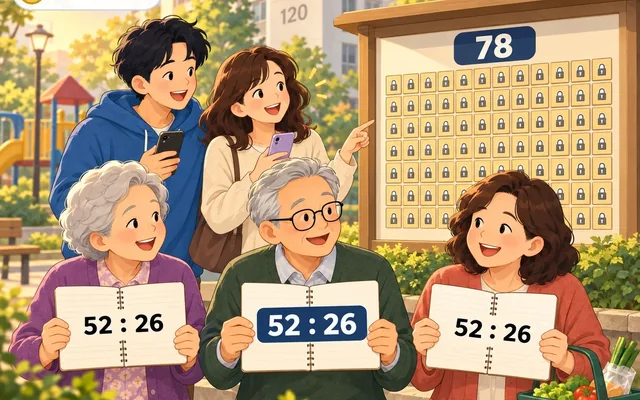
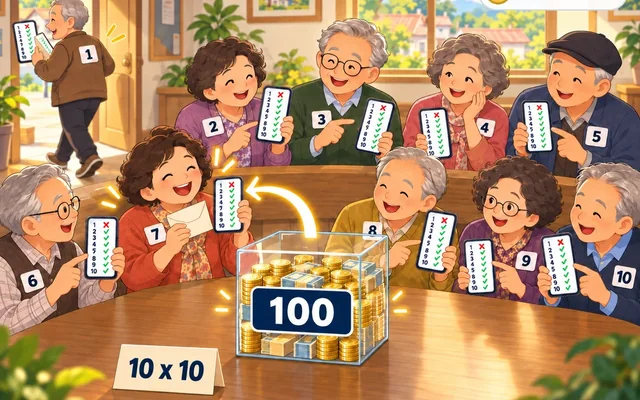
Many computers each hold a copy of the same record book. Once something is written, it's hard for one place to change it quietly. If it's a public record book, anyone can check it on a block explorer (a site that shows the record book to anyone).
Then you add rules. The owner can only change at the official counter, and only up to a set price.
Has anyone actually tried it?
Yes. But mostly it's one company trying it at its own concerts or tournament.
In Korea, Hyundai Card said on January 24, 2024 that all tickets for its Hyundai Card Curated 92 concerts, running for 3 weeks from February 7, would be NFT tickets. Only people picked in a draw could buy them, at 66,000 KRW. Hyundai Card said only the buyer could view the ticket and transfers were blocked. It also said all tickets for the Da Vinci Motel concerts in September 2023 had been NFTs.
According to a YTN article (February 12, 2024), each person could buy only one ticket, and people got in with a QR code in the app. But there was a separate ID check at the door. Experts said the trick of handing over the whole phone was still possible.
Outside Korea, UEFA (the Union of European Football Associations) handed out about 1 million tickets for Euro 2020 through a mobile ticket app that used blockchain technology. According to a case study (August 2021), 560,000 of those tickets were passed to companions inside the app. The focus was on stopping fake tickets, and nothing was said about capping resale prices.
GUTS Tickets in the Netherlands was introduced in a 2017 article as a way to stop tickets from being resold for more. CM.com, which bought the company on February 25, 2025, explained that when a ticket is resold, the original code becomes invalid and the ticket is sold again at a set price. Both are the company's own descriptions.
Japan went with the law before the tech. From June 14, 2019, it banned reselling certain tickets as a business, above the sale price, without the organizer's consent. That covers tickets that say resale isn't allowed, set the date and seat (or the person entering), and were sold after checking the buyer. The Japanese Agency for Cultural Affairs still says in its guide that high-priced resales without consent keep turning up.
The Korean government also said on September 13, 2024 that it would spend 2 billion KRW through the next year to support booking systems using new tech like NFTs. I couldn't confirm from public sources what system came out of that.
And SASEUL? I couldn't find any official announcement about selling concert tickets on SASEUL. According to the official notice from August 9, 2023, a feature for making NFTs and sharing them by link was added to Guardee, the SASEUL wallet app.
What can't a blockchain fix?
Deals outside the record book. Hand over the phone or the account holding the ticket and the owner field in the record book stays the same. Workarounds like putting the markup on merchandise don't show up in the record book either.
In the end, a person checks who's who. To see whether the owner in the record book is the same as the person coming in, someone has to look at an ID. And if the wrong name goes in at the start, that wrong record stays too.
People who can't use apps can get left behind. The YTN article also pointed out that app-only tickets could be another kind of unfairness for people who aren't comfortable with digital tools.
The price cap isn't tech. It's a rule the organizer sets. Without the law behind it, deals outside the official counter are hard to punish. That's why Korea changed the law too.
If one company manages all the tickets, I think a normal computer system could set similar rules. My guess is that what a blockchain adds is that several places see the same record, and it's hard to change it quietly later.
What kind of record book SASEUL runs on is in SASEUL basic facts and SASEUL's two record books. What SASEUL coin (SL) is used for right now is in What is SASEUL coin (SL) used for?.
Sources
- Yonhap News (Nate News) · "올해 암표 거래 약 13만건…해외 거래·MD 끼워팔기 등 고도화" (about 130,000 scalped ticket deals this year, in Korean) · 2026-09-17, checked 2026-09-29 (the association's own survey)
- Newspim · "'매크로' 이용 입장권 매매 처벌 받는다…암표 거래 시 최대 징역 1년" (penalties for reselling tickets bought with macros, in Korean) · 2024-03-18, checked 2026-09-29
- Asia Economy · "'공연 암표 전면 금지' 정가 웃도는 재판매, 처벌 수위 대폭 강화" (full ban on concert ticket scalping, in Korean) · 2026-01-29, checked 2026-09-29
- Korea Policy Briefing · "암표는 불법! 사는 것도 파는 것도 안 돼요!" (scalped tickets are illegal, in Korean) · 2026-03-16, checked 2026-09-29 (in force August 28)
- Korea Policy Briefing · "매크로 관계없이 '암표 판매 전면 금지' 추진…처벌 수위도 강화" (plan to ban scalping regardless of macros, in Korean) · 2024-09-13, checked 2026-09-29 (plan to support NFT booking systems with 2 billion KRW)
- Hyundai Motor Group Newsroom · "현대카드, 가수 장범준과 NFT 티켓 활용해 암표 없는 공연 만든다" (Hyundai Card's NFT ticket concerts, in Korean) · 2024-01-24, checked 2026-09-29
- YTN · "장범준 공연 NFT 티켓 사용해보니…" 암표 근절에 실효성 있나 (does the NFT ticket really stop scalping, in Korean) · 2024-02-12, checked 2026-09-29
- TheTicketingBusiness · Case Study: UEFA Euro 2020 & the role of mobile blockchain ticketing · 2021-08-03, checked 2026-09-29 (same content as the SECUTIX case study)
- BusinessCloud · It takes GUTS to tackle ticket touts through blockchain · 2017-11-29, checked 2026-09-29
- CM.com · CM.com acquires GUTS Tickets: Ticket sales now also via blockchain technology · 2025-02-25, checked 2026-09-29
- Korea National Law Information Center · Punishment of Minor Offenses Act, reasons for enactment and amendments (in Korean) · enacted 1954-04-01, amended 1973-02-08 (ticket scalping added), checked 2026-09-29
- Korea National Law Information Center · Public Performance Act, Article 4-2 (ban on improper buying and selling of admission tickets) (in Korean) · Act No. 21397, version in force 2026-08-28, checked 2026-09-29
- e-Gov Law Search · 特定興行入場券の不正転売の禁止等による興行入場券の適正な流通の確保に関する法律 (Japan's Ticket Resale Act, in Japanese) · Act No. 103 of Heisei 30, checked 2026-09-29 (Article 2 on which tickets it covers, Article 3 on the ban)
- Agency for Cultural Affairs, Japan · チケット不正転売禁止法 (Ticket Resale Act guide, in Japanese) · checked 2026-09-29 (in force 2019-06-14)
- Official SASEUL Telegram notice #56 (Guardee features for making and sharing NFTs) · 2023-08-09 19:16 (Korea time), checked 2026-09-29
- CoinMarketCap · About SASEUL (signatures from 6 of 9 validator seats) · the project's own description, checked 2026-09-29
- Official SASEUL explorer · Statistics (validators V1 to V9) · checked 2026-09-29
I opened and checked 6 articles, 2 Korea Policy Briefing pages, 2 company announcements, the original text of 3 Korean and Japanese laws, the Japanese Agency for Cultural Affairs guide, and SASEUL's official notice, explorer and CoinMarketCap description directly on September 29, 2026.